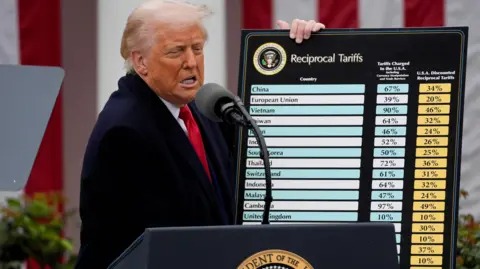
Tariffs — import duties and related trade barriers — are once again in the spotlight, driven chiefly by the trade strategy of Donald Trump’s administration in the U.S., the response of trade partners, and reactions in emerging‑economy markets Tariff News. A number of recent developments illustrate this.
U.S. global tariff strategy under legal scrutiny
The U.S. Supreme Court is currently examining the breadth of executive power to impose sweeping tariffs. During recent hearings, justices expressed strong scepticism of the idea that the president can unilaterally impose large‑scale tariffs under emergency powers such as the International Emergency Economic Powers Act (IEEPA). Reuters+2AP News+2
This legal challenge creates uncertainty about whether existing tariffs will stand and how future trade policy will be designed. The Wall Street Journal+1
U.S. imposes broad reciprocal tariffs
The U.S. has taken sweeping action by imposing reciprocal tariffs on a large number of countries. For example:
-
A recent executive order covers over 69 countries, with tariffs ranging from 10 % up to 41 %. Business Standard+1
-
Specific sectors and regions (like the GCC and Middle East) are affected. Arab News+1
These moves reflect a strategy to push for more favourable trade terms, reduce deficits and protect domestic industries.
Impacts on exporters and developing countries
The effects of tariff shifts are felt acutely in export‑oriented economies. Some examples:
-
For the Bangladesh/India region (and Pakistan), the threat of U.S. tariffs may lead to large export losses: one study estimated a potential 20‑25 % export drop to the U.S. from Pakistan under a tariff scenario. Profit by Pakistan Today
-
In India’s seafood export sector: tariffs by the U.S. (effective rate ~58.26 %) are undermining competitiveness and prompting diversification strategies. The Times of India
-
Pakistan is simultaneously committing to reduce its own average applied tariffs by about 43 % over five years under an agreement with the International Monetary Fund (IMF) — reflecting a shift toward trade liberalisation. Business Standard+1
These dual pressures — higher external tariffs and internal liberalisation — create complexity for trade policy in developing economies.
Industry reactions & supply‑chain pressures
Domestic industries and global supply chains are reacting to tariff uncertainty. For example:
-
The bicycle industry — which depends heavily on imported parts and global sourcing — is already facing higher costs and disrupted sourcing because of tariffs. PeopleForBikes
-
Shipping and global logistics firms remain cautious: despite some positive signals (e.g., strong demand in China), the uncertainty around trade policy continues to cast a shadow. Financial Times
Why this matters
Consumer costs & inflation
Tariffs often increase import costs, which can be passed on to consumers in the form of higher prices. In economies like Pakistan (and many others), this adds inflationary pressure.
Export competitiveness & jobs
Higher tariffs by major markets reduce demand for exports, which can harm industries and employment in export‑driven sectors. This is especially important for countries like Pakistan, Bangladesh, India, etc.
Trade diversion & global supply chains
Tariff measures don’t just reduce trade — they may reroute it. Firms may seek alternative markets or suppliers, perhaps at higher cost or less efficiency. Research shows tariffs can affect the structure of global trade networks. arXiv+1
Policy uncertainty & investment
Uncertainty about tariffs — including legal challenges to their authority — reduces the willingness of firms to invest in long‑term supply chains or trade‑oriented infrastructure.
Implications for Pakistan & the region
Given you are in Pakistan, here are some tailored implications:
-
Pakistan’s commitment to cut its average applied tariffs to around 6‑7 % over coming years reflects a trade liberalisation agenda. Business Standard+1
-
At the same time, external risks (like higher U.S. tariffs) could reduce export demand — for example in textiles, leather, rice. The aforementioned potential 20‑25 % drop in Pakistani exports to the U.S. is a red‑flag. Profit by Pakistan Today
-
Tariff policy reforms (e.g., simplifying slabs, reducing duties on key raw materials) will affect import‑costs and production competitiveness. For example, Pakistan’s plan to rationalise customs duties and reform the tariff regime. Ice+1
-
Industry sectors should stay alert: given the global context, exporting firms should explore diversification of markets, and domestic firms may reconsider supply‑chain dependencies on imports subject to high duties.
What to watch next
Here are key indicators and events to monitor:
-
The decision of the U.S. Supreme Court on the legality of broad executive tariff powers. That ruling will shape the future tariff‑landscape in the U.S. and globally.
-
Whether the U.S. tightens or relaxes tariffs further, especially reciprocal tariffs and sector‑specific measures (e.g., steel, aluminium, technology).
-
Responses by trade partners: Will countries retaliate, seek trade deals, or shift sourcing?
-
Pakistan’s progress in implementing its tariff reform plan — how quickly the slabs change, how industries respond, and whether export performance improves.
-
Impact on specific sectors in Pakistan (textile, leather, agriculture) — looking at export volumes, cost of imported inputs, and competitiveness.
-
Global supply‑chain shifts: If companies move sourcing out of tariff‑hit countries, Pakistan might both gain (as alternative supplier) or lose (if losing markets).
Conclusion
Tariff policy is back in the limelight with major ramifications. On one hand, large economies such as the U.S. are using tariffs aggressively; on the other hand, countries like Pakistan are committing to liberalisation. For businesses, policymakers, and industries, this dual dynamic implies both risk and opportunity. Exporters must brace for elevated external hurdles; import‑dependent industries must manage cost pressures; and governments need to balance protection with competitiveness.